The Thank-You Economy: Why Hollywood’s Thanksgiving Posts Are a Product Now
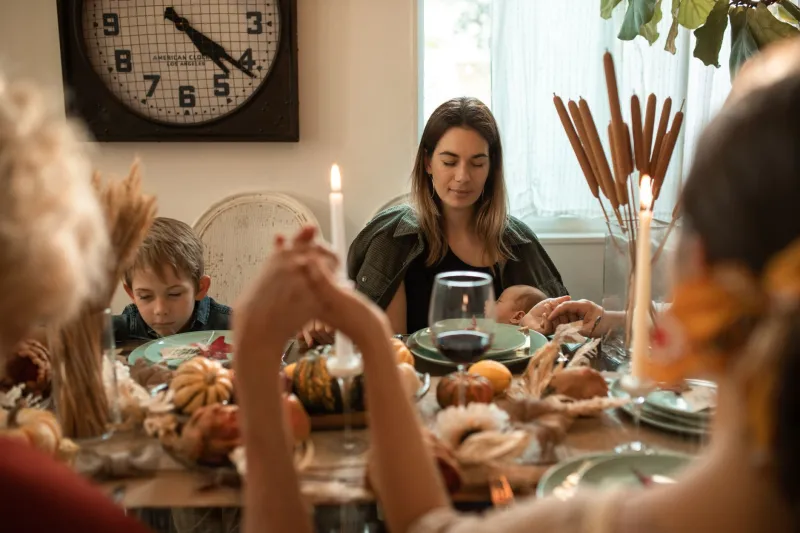
Thanksgiving 2026 lands on November 26, which means we are already deep in the soft-launch phase of Hollywood gratitude. You know the look: a carousel of sunlit family photos, a handwritten note on cream stationery, a charity link tucked into the caption, and a paragraph that thanks “the village” without naming a single person in it. It is warm. It is fuzzy. It is also, increasingly, a scheduled content drop.
I’m not here to call every famous person’s thank-you note fake. That would be lazy, and it would miss the more interesting story. The interesting story is that gratitude has become one of the most reliable pieces of the celebrity content calendar—cheap to produce, hard to criticize, and weirdly effective at moving the metrics that publicists actually care about.
The Calendar Is the Giveaway
Nobody accidentally posts a nine-slide gratitude carousel at 8:12 a.m. Eastern on the Tuesday before Thanksgiving. That is a decision. It is a decision made in a planning meeting, probably next to a slide labeled “holiday tentpoles.”
The Thanksgiving post has become the unofficial start of the awards-season soft campaign. It says: I am warm, I am grounded, I am the kind of person who remembers the crew. It arrives just early enough to feel spontaneous and just late enough to miss the actual holiday chaos. And because it is not tied to a premiere or a product, it reads as personality rather than promotion—even when it is very much both.
Publicists like it for the same reason brands like pumpkin spice: it is seasonal, familiar, and almost impossible to mess up. A gratitude post can be shot in a kitchen. It can be written by a team. It can be approved by three people and still sound like it came from the heart. That is not a scandal. That is efficiency.
Gratitude With a Call to Action
The modern Thanksgiving post rarely stops at “thank you.” It thanks a charity. It tags a food bank. It links a donation page. And look, a lot of that is genuinely good. A celebrity with a large platform can move real money to real organizations in a week when food insecurity is front of mind for a lot of Americans.
But the mechanics are worth noticing. A charity shout-out gives the post a second life beyond the feed. It becomes a press item. It becomes a screenshot in a brand deck. It becomes proof that the star’s values align with a partner’s values. None of that cancels out the donation. It just means the thank-you is doing more than one job.
The same goes for the “tag someone who helped you” prompt. It looks like generosity. It is also an engagement engine. Every tag pulls another audience into the comments. Every comment bumps the post. Every bump makes the gratitude look bigger than it might have been. That is not evil. It is just math wearing a cardigan.
The Family Photo as Proof of Life
Then there is the family photo. The Thanksgiving table. The cousins. The dog. The slightly burnt pie that is definitely not slightly burnt. For years, the holiday post was the one place where celebrities could look normal—or at least normal-adjacent. In 2026, it is the one place where normalcy is fully produced.
That is not entirely the stars’ fault. Audiences have spent the last decade demanding access, and access is exhausting. If you post the real table, someone will zoom in on the place settings. If you post nothing, someone will ask why you hate your mother. The staged family photo is a compromise: here is a version of my life that satisfies your curiosity without giving you the whole house tour.
The problem is that the compromise has become the standard. When every feed has the same golden-hour table and the same “so grateful for this crazy bunch” caption, the post stops functioning as a window and starts functioning as a mirror. We are not learning anything about the star. We are learning what the star’s team thinks we want to see.
Where Audiences Are Drawing the Line
The comments are where this gets interesting. In the past few years, I have watched audiences get sharper about gratitude. They still like it. They still engage with it. But they have started asking a very specific question: is this for me, or is this for the algorithm?
A handwritten note that thanks a specific crew member by name lands differently than a note that thanks “everyone who made this year possible.” A charity link with a matching donation lands differently than a charity link with no follow-up. A family photo that includes a messy kitchen lands differently than one that looks like a catalog shoot. Audiences are not demanding perfection. They are demanding specificity. Specificity is hard to fake.
That is the line. Not sincere versus fake—that is too simple. The line is specific versus generic. A specific thank-you costs something. It requires memory. It requires a name, a detail, a story that could only come from the person posting it. A generic thank-you costs nothing but a caption writer’s afternoon.
What Sincere Looks Like Now
So what does a good Thanksgiving post look like in 2026? Honestly, it looks a little awkward. It names one person instead of twelve. It thanks a food bank in the star’s hometown and says why. It posts a photo that is slightly off-center because nobody had time to stage it. It does not try to be a brand statement. It tries to be a note.
The good news is that audiences are forgiving. They do not need celebrities to be monks. They just want to feel like the gratitude is pointed at something real, not sprayed at a demographic. The thank-you economy is not going anywhere—it is too useful, too cheap, and too safe to disappear. But the stars who figure out the difference between a post that performs gratitude and a post that actually contains it will be the ones who get to keep the holiday.
And if you are reading this while planning your own Thanksgiving 2026 post, here is my advice: skip the carousel. Thank one person by name. Link one thing you actually care about. Let the pie be burnt. It will read better than anything a content calendar can give you.