The Off-Record Room: Why Hollywood’s Quietest Invitations Are the Loudest Flex
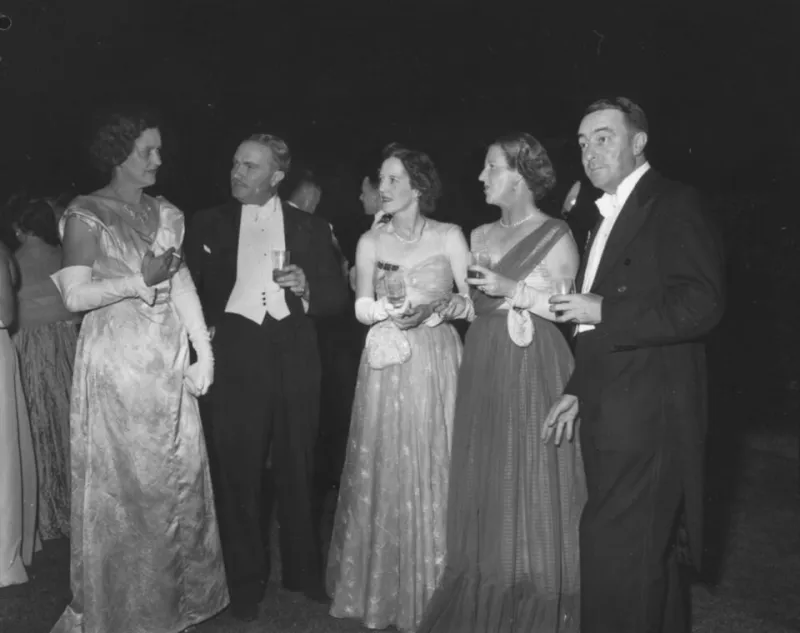
Photo: State Library of Queensland, Australia, No restrictions, via Wikimedia Commons
There’s a moment at the start of a certain kind of Hollywood evening when the room seems to hold its breath. The invitations were vague in the best way. The address came late. The dress code was specific but not flashy. And then, near the entrance, right past the greeting table, someone politely asks for your phone.
Not for a photo. Not for a handle. For safekeeping.
In 2026, that little pocket check has become one of the most talked-about rituals of the holiday and awards-season circuit. Dinners, private screenings, post-premiere suppers, and even a few Thanksgiving-week gatherings are going camera-free—or at least camera-limited—and the people who get invited are learning that the real luxury isn’t what happens inside the room. It’s that the room was designed so none of it leaves.
The New Door Policy Is a Pouch
Forget the velvet rope. The new status marker is a small, soft pouch with a lock or a sticker over the camera lens. Some hosts use a check-in system that feels like a coat check for your entire digital life. Others go lower-tech: a basket, a handwritten sign, and a host who says, “We’re keeping this one off the record,” with a smile that is not really a suggestion.
The enforcement varies, but the message doesn’t. A phone-free room is not an anti-technology statement. It’s a production decision. Hosts know that one posted photo can change the temperature of a whole evening. A casual dinner becomes a press moment. A private toast becomes a quote. A famous guest’s relaxed face becomes a meme by morning.
So the phone goes away. And once it does, something shifts. People look up. Conversations stretch out. The person who usually spends the first twenty minutes documenting the room actually has to be in it.
Privacy Is the Point—and the Product
Here’s the part nobody says out loud: a no-photo rule is also a guest-list filter. It tells you who is trusted, who is expected, and who is simply lucky to be there. The invite itself becomes the content. If you can’t post about it, the fact that you were included does the talking.
That’s a very 2026 kind of flex. We’ve spent years watching Hollywood turn every backstage moment into a brand asset. Now the pendulum is swinging toward rooms that refuse to be assets at all. The host isn’t selling access. The host is protecting it.
And guests are responding. The most sought-after invitations this season aren’t necessarily the biggest ones. They’re the ones with the tightest door, the smallest list, and the clearest instruction: be here, not broadcasting here.
What the Rule Actually Enforces
A camera-free room isn’t just about secrecy. It’s about attention. When phones are gone, the usual interruptions disappear. No one is checking angles. No one is drafting a caption while pretending to listen. The room gets quieter in a way that feels almost old-fashioned.
It also protects the people in it. A celebrity can have a bad-angle night without it becoming a story. A director can test an opinion before it becomes a headline. A couple can have a dinner without the internet narrating it. That kind of protection is not cheap, and everyone in the room knows it.
There’s a hierarchy to it, too. The outer room may allow photos. The inner room may not. The first twenty minutes may be a content window; the rest of the night is off-limits. Some hosts bring in one official photographer and then send the phones away. The message is subtle but clear: documentation is a privilege, not a default.
The Etiquette Is Evolving
The social rules around all this are still being written. The safest move is to ask before you arrive, not after you’ve already pulled out your phone. Don’t negotiate at the door. Don’t make a joke about being “off the grid” while trying to sneak a picture of the centerpiece. And please, don’t be the guest who treats a phone pouch like a personal insult.
The hosts I’ve spoken with say the same thing: it’s not about distrust. It’s about creating a room where trust isn’t tested. The best version of the rule feels less like a lecture and more like a relief.
Why the Best Moments Are Unposted
A few years ago, the measure of a great Hollywood night was how quickly it showed up online. In 2026, the measure is increasingly how little of it does. The dinner where someone told a story that made the table go silent. The screening where the Q&A turned into a real conversation. The dance floor that no one needed to prove happened.
Those moments don’t trend. They don’t get screenshotted. They don’t become a carousel. They just become the thing people talk about later—quietly, carefully, and only with people who were there.
That’s the trade. Hollywood is finally admitting that some of its best rooms are the ones that don’t perform. Privacy has become a social skill, and the people who understand it are the ones getting invited back.
The phone bag isn’t the point. The point is the room you get to walk into once your phone is gone.