Curb-to-Gate Glamour: Why Celebrity Travel Days Are Now Fully Produced
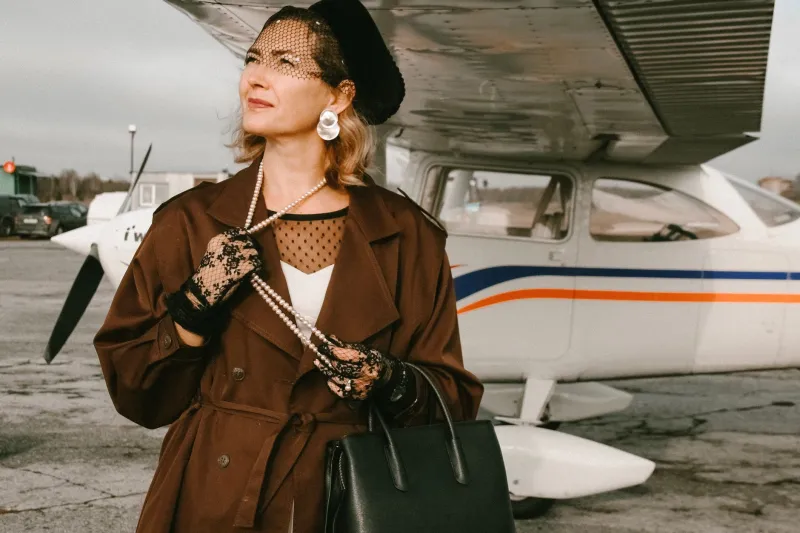
There was a time when an airport photo felt like a small accident. A famous person, a hoodie, a paper cup, a slightly rumpled look that suggested they had simply left the house like everyone else. That version of the airport still exists, but it is no longer the version most of us see. In 2026, the travel day has become its own celebrity fashion event, complete with mood boards, brand seeding, and departure looks that are planned with the same care as an awards-season gown.
I have been watching this shift for a while now, and what interests me is not that celebrities dress well at LAX or JFK. Of course they do. What interests me is how the airport became a place where a very specific kind of accessibility is performed. The message is supposed to be: look, I am just like you, catching a flight. The reality is: this bag was chosen, this sweater was seeded, and this coffee is doing character work.
The Departure Look Is a Whole Production
The modern travel-day outfit is a study in controlled casualness. An oversized blazer over a soft hoodie. Leggings that cost more than some people’s rent. A designer duffel that looks broken in but is probably not. Sunglasses indoors. Sneakers that are comfortable enough for a terminal but photogenic enough for a paparazzi gallery. And always, always the iced coffee or the reusable water bottle, held like a prop that says I am hydrated and unbothered.
None of this is an accident. Stylists talk about travel looks the way they talk about press-tour looks. There are fittings, yes, even for a flight. There are conversations about what reads as effortless on camera and what reads as trying too hard. There are brands that quietly send luggage, sneakers, skincare, and outerwear to celebrity teams because a single well-placed airport photo can do something a formal ad cannot: it can make a product look like part of a real life.
That is the key. The red carpet is fantasy. The airport is daily life. A gown is something most of us will never wear. A great travel outfit is something we can imagine wearing to catch a 7 a.m. flight. That makes the airport a very valuable fashion space.
Why the Airport Beat the Red Carpet
The red carpet has rules. It has a dress code, a schedule, and a very clear transactional energy. The airport feels looser. It feels accidental, even when it is not. That is why celebrities and their teams love it. It offers the illusion of being caught off guard while still allowing for a highly controlled image.
There is also the matter of frequency. Awards season happens once a year. Travel happens constantly. A star can generate airport content on the way to a film set, a press junket, a vacation, a fashion week, a friend’s birthday. It is repeatable, low-stakes, and endlessly usable. Brands noticed. Fashion deals in 2026 are not only built around magazine covers and gala moments. They are built around the idea that a celebrity can make a suitcase, a pair of sneakers, or a cashmere travel set feel like a personality trait.
And the audience plays along because the airport is one of the few places where fame and normal life seem to touch. We have all been tired at a gate. We have all worried about overhead bin space. We have all looked a little chaotic going through security. When a celebrity does it with a perfect coat and a smoothie, it feels like a bridge between their world and ours. It is a bridge, but it is a bridge with a sponsorship option.
The Illusion of Being Caught Off Guard
This is where things get tricky. The airport look works only if it feels unplanned. If the audience senses too much production, the whole thing collapses. A star who looks like they are shooting a campaign in the middle of Terminal 4 is not relatable. They are just in a different kind of advertisement. But if the look is too sloppy, the fashion conversation disappears. The sweet spot is a very specific kind of almost-candid: polished enough to photograph, casual enough to explain away.
That is why the coffee cup matters. It gives the hands something to do. It suggests motion. It says I am a person with a flight to catch, not a person standing still waiting for a photographer. The same goes for the slightly messy bun, the phone in hand, the tote bag with a laptop peeking out. These are small signals of real life. They are also signals that can be chosen, arranged, and repeated.
I do not think every airport photo is staged. Plenty of celebrities are genuinely just trying to get from point A to point B without a camera in their face. But the ecosystem around the airport has changed. The photo is no longer just a photo. It is a fashion moment, a brand opportunity, and a personality check all at once. Even the absence of a look can become a statement. A star who refuses to play the game reads as private or serious. A star who plays it too hard reads as thirsty. The middle ground is now a professional skill.
What the Travel-Day Look Says About Access
The strange thing about airport fashion is that it sells accessibility while depending on things most people do not have: stylists, drivers, private lounges, and the ability to treat a flight as a content opportunity rather than a logistical nightmare. That does not mean the appeal is fake. It means the appeal is complicated. We are not really looking at a celebrity being normal. We are looking at a celebrity performing a version of normal that has been edited for public consumption.
Still, I understand why people love it. The airport look is aspirational without being as intimidating as a ballgown. It makes fashion feel usable. It says you too can wear this kind of sweater on a plane, even if your version comes from a different store and your flight involves a middle seat. The fantasy is not that the celebrity is exactly like us. The fantasy is that the gap is small enough to close with the right duffel bag.
That is the business of the travel day in 2026. It is not really about travel. It is about making fame feel touchable. It is about turning a transit moment into a fashion story. And it is about the quiet agreement between celebrity, brand, and audience that if the coffee cup looks right, we will all pretend we did not notice the planning.
So the next time you see a star walking through an airport with perfect lighting and a very photogenic carry-on, enjoy the look. Just remember that the most important accessory is not the bag. It is the illusion that nobody planned a thing.